Search site:

Aramar
  • About Us
  • Our Team
  • Join the Team
  • Insights & Updates
  • Talk to Us
  • Financial Reporting
    • Financial Reporting.

      • IBM Planning Analytics
      • IBM Controller
      • IBM Cognos Analytics
      • Fast Financials
      • Lease-16
      • IBM Planning Analytics.

        IBM Planning Analytics is business performance management software that combines budgeting and AI-enhanced forecasting with intuitive analysis, reporting and workflows.

      • IBM Controller

        IBM Controller delivers accurate, fully auditable financial results, a guided period close user experience, and automatic consolidation and reporting.

      • IBM Cognos Analytics

        IBM Cognos Analytics is infused with AI and offers an intuitive and user-friendly experience.

      • Fast Financials

        Our solution for Financial Consolidation, Reporting, Cash Flow and Planning

      • Lease-16

        Our accounting IFRS 16 and FRS 102 Lease management software solution

    • IBM Planning Analytics
    • IBM Controller
    • IBM Cognos Analytics
    • Fast Financials
    • Lease-16
  • ITFM
    • IBM Apptio.

      • IBM Apptio
      • IBM Apptio

        Take control of your IT spending and plan with confidence

      • IBM Apptio
    • ESG Reporting
      • IBM Envizi.

        • IBM Envizi
        • IBM Envizi

          Turn ESG data into clear, auditable insights and compliant reports.

      • IBM Envizi
    • Customer Success
      • Customer Success.

        • Customer Success Programme
        • Customer Stories
        • Customer Success Programme

          All our customers join our success program.

        • Customer Stories

          Don’t just take our word for it…

      • Customer Success Programme
      • Customer Stories
    • Support
      • Support & Delivery.

        • Implementation and Development
        • Cloud Migration
        • Support
        • IBM Licensing
        • IBM Expert-Led Training
        • IBM Health Checks
        • Implementation and Development

          From practical, hands-on development through to strategic guidance, our team of specialists is here to help.

        • Cloud Migration

          We have unrivalled experience in helping customers migrate their Business Analytics installations to the Cloud and helping them to take advantage of all IBM SaaS has to offer.

        • Support

          We are proud of our dedicated, friendly support desk, providing IBM Certified support and application support.

        • IBM Licensing

          As an Gold IBM partner, Aramar are able to negotiate the best terms with IBM on software licences and can provide wrap-around support to help you get the best from the products you have purchased.

        • IBM Training Workshops

          Practical workshops designed for all experience levels, from beginner users learning the fundamentals through to advanced users and administrators looking to expand their knowledge.

        • IBM Health Checks

          Get a clear, practical assessment of your IBM Planning Analytics or IBM Controller environment, including performance, governance and best practice recommendations.

      • Implementation and Development
      • IBM Cloud Migrations
      • Support
      • IBM Licensing
      • IBM Training Workshops
      • Health Checks
    • Knowledge Centre
      • Aramar Knowledge.

        • Aramar Specialist Knowledge
        • Expert insight for IBM users

          Explore upgrade guidance, how-to guides and technical best practice across the IBM suite. Practical, real-world insight to help you solve problems faster and get more from your IBM investment.

      • Aramar Specialist Knowledge
    • Our Team
    • Join the Team
    • Insights & Updates
    • Talk to Us

    IBM Planning Analytics

    52
    • How to: Create Hierarchies From Attributes in IBM Planning Analytics.
    • Fundamentals: Feeders in IBM Planning Analytics
    • How To: Install/Uninstall Planning Analytics for Excel (PAfE)
    • What is a: Hierarchy in IBM Planning Analytics?
    • How to: Add a new Element to an existing Dimension in IBM Planning Analytics
    • How to: Edit Dimensions in IBM Planning Analytics
    • How to: Prevent Data Loss Using the Leaves Hierarchy in IBM Planning Analytics
    • How to: Find the Current Subscription Administrator
    • How to: Remove a Subscription Administrator
    • How To: Add a Subscription Administrator
    • What is a: Subscription Administrator
    • How to: Check and manage your IBM Planning Analytics licence usage vs. your licence entitlement
    • What are: Parameters in Planning Analytics
    • What is a: Data Source
    • How to: Create a Turbo Integrator (TI) Process in IBM Planning Analytics?
    • How To: Apply Formats to Data Elements
    • What are: Dimensions in IBM Planning Analytics
    • How to: Use a Cube View in Planning Analytics for Excel (PAfE)
    • How to: Create a Cube in IBM Planning Analytics
    • How to: Fix Views That Need Refreshing in IBM Planning Analytics
    • How to: Hide Cubes from Users in IBM Planning Analytics
    • Aramar Tips: Working with Subsets in IBM Planning Analytics
    • How To: Subscribe to IBM Security Bulletins for Planning Analytics, Cognos Analytics and Controller
    • How to: Enable dark mode in Planning Analytics Workspace
    • How to: Compare scripts in Planning Analytics Workspace
    • How to: Review process changes in Planning Analytics Workspace
    • How to: Check whether a Dimension exists in IBM Planning Analytics
    • How to: Control Who Has Access to the Planning Analytics Assistant
    • 5 Top Tips for Working with Planning Analytics for Excel (PAfE)
    • How to: Add Spacer Rows and Columns to Universal Reports in Planning Analytics for Excel (PAfE)
    • How to: Load a file via process in Planning Analytics Workspace (PAW)
    • How To: Find out your Planning Analytics Version using Workbench (Planning Analytics on Cloud)
    • How To: Create a simple hierarchy in Planning Analytics
    • How to: Change maximum login attempts to Planning Analytics on Cloud
    • How to: Using the While statement Turbo Integrator Process in IBM Planning Analytics
    • How to: Change a Dimension Element Weight in Planning Analytics via TI process
    • Aramar Tips: Moving Databases in Planning Analytics
    • How to: Mapping a CSV data source directory in IBM Planning Analytics on Cloud
    • How to: Mapping a Network Drive between Live and Development Environments in Planning Analytics on Cloud
    • How To: Resolve ODBC error ‘unable to open connection to database’ in IBM Planning Analytics 
    • How To: Investigating issues using the TM1 Server Log
    • How To: Check the version of IBM Planning Analytics for Excel
    • How to: Change the display row limit in Planning Analytics for Excel
    • How To: Set up Inactivity Timeout Sessions in IBM Planning Analytics
    • How to: Check the Security of a Dimension in IBM Planning Analytics
    • Aramar Tips: Using PowerShell in Planning Analytics
    • Fundamentals: DBRW in Planning Analytics
    • How to: Create a Dimension in IBM Planning Analytics
    • How to: Create Subsets driven by another Dimension in Planning Analytics
    • Aramar Tips: Creating documentation IBM Planning Analytics
    • Aramar Tips: Checking your parameters with a Planning Analytics TI Process
    • Aramar Tips: Analysing Data in IBM Planning Analytics for Excel

    IBM Controller

    28
    • How to: Clear the local cache within Controller
    • How to: Check currency translation using a standard report in IBM Controller
    • When: Does the FAP Publish Client from Controller Need Updating?
    • How to: Create Multi Period Import Specs in IBM Controller Web
    • How To: Subscribe to IBM Security Bulletins for Planning Analytics, Cognos Analytics and Controller
    • Weekly reporting vs period close in IBM Controller: what to consider
    • How to: Audit the Licenced Number of Controller Users
    • How to: Reconcile Data by Company in IBM Controller Web
    • Aramar Tips: The Benefits of Using IBM Controller Web for Data Import via Import Specifications
    • How to: Improve your Controller Excel Report Performance
    • Fundamentals: What’s the difference between IBM Controller Web and IBM Controller Classic?
    • How to: Change the reporting currency belonging to a local subsidiary (or reporting entity) in IBM Controller
    • How to: Effectively structure user security in IBM Controller
    • How to: Run an internal database optimise in IBM Controller
    • How to: Schedule an internal optimise in IBM Controller
    • How to: Drill Data within IBM Controller
    • How to: Change the reporting currency belonging to the group consolidation in IBM Controller
    • How To: Change the method of translation applied to the P&L statement, or create different P&L translation views from the same source data in IBM Controller
    • How to: Check when a Company was last updated (and by who) from within IBM Controller Web
    • How to: Consolidate a Submission in IBM Controller Web
    • How To: Interrogate the backend SQL table using IBM Controller
    • How To: Fix the Intercompany button not appearing in IBM Controller
    • How to: Check the size of your IBM Controller database
    • How to: Condense XACCLOCK Table
    • How to: Save Time Posting Journals on Accounts That Reconcile to Each Other
    • How to: Add Companies to Linked Structures Directly from the Company Structure Menu
    • How to: Back Up an IBM Controller Database
    • How to: Navigate the Backend SQL tables within IBM Controller

    Extra Insights

    3
    • How To: Subscribe to IBM Security Bulletins for Planning Analytics, Cognos Analytics and Controller
    • How to: Manage Users in IBM MySupport
    • Aramar Tips: 5 Easy tips to consider when adding commentary to your financial reports 
    View Categories
    • Home
    • knowledge-share
    • IBM Planning Analytics
    • How to: Create Hierarchies From Attributes in IBM Planning Analytics.

    How to: Create Hierarchies From Attributes in IBM Planning Analytics.

    Hierarchies are a great way to improve analysis in IBM Planning Analytics without adding additional dimensions to your cubes.

    For example, your products may already roll up by product type, but you may also want to analyse those same products by manufacturing country, supplier or brand. Instead of manually maintaining multiple consolidation structures, you can automatically generate hierarchies using attributes that already exist within your dimension.

    This is especially useful when dimensions are regularly updated from an ERP or source system, where manually maintaining hierarchies would quickly become time-consuming.

    Creating Hierarchy’s using the “Create Hierarchy” shortcut . #

    In Planning Analytics Workspace, there is a simple “Create Hierarchy” option available within the dimension editor by right clicking on the Dimension and selecting “Create Hierarchy”.

    This automatically generates a basic hierarchy from an attribute.
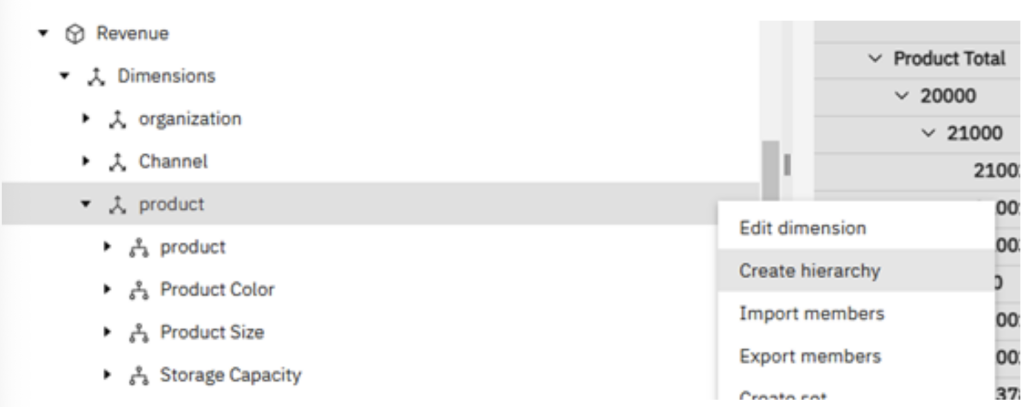
    create hierarchy in planning analytics

    The good news is that the same result can be achieved very easily using a TurboIntegrator (TI) process.

    The advantage of building your own process is that you gain far more control over how the hierarchy is created and maintained.

    What this process will do #

    This process will:

    • read a text attribute from a dimension
    • create a new hierarchy
    • automatically generate consolidations from the attribute values
    • assign the leaf-level elements underneath them

    Step 1 — Create a new TI process #

    Create a new TurboIntegrator process with no data source.

    We are only using the process to build metadata, so no source file or cube is required.

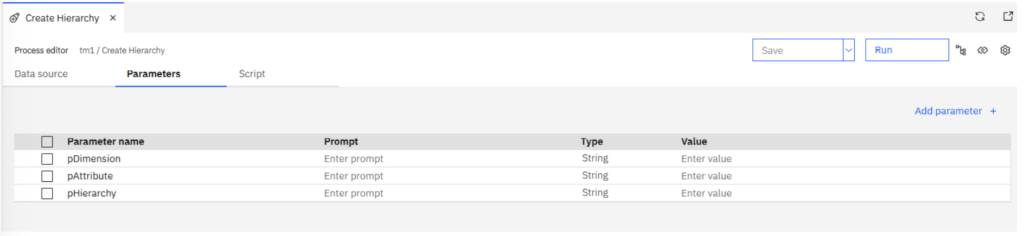
    The process will use three parameters:

    • Dimension Name
    • Attribute Name
    • Hierarchy Name

    create hierachy parameters planning analytics

    Step 2 — Add the Prolog code #

    All of the logic sits within the Prolog tab of the process.

    The script:

    • checks the dimension exists
    • creates or clears the hierarchy
    • loops through the dimension elements
    • reads the attribute values
    • builds the hierarchy structure automatically

    Paste the following code into the Prolog section:

    # Check if the dimension exists, if it returns 0 it does not, then quit the process

    if (DimensionExists( pDimension )= 0);

    ProcessQuit;

    endif;

    # Set the name of the cube that stores the attributes for the dimension.

    vAttributeCubeName = ‘}ElementAttributes_’ | pDimension ;

    # Does the hierarchy exist in the dimension?

    if (HierarchyExists( pDimension, pHierarchy )= 0);

    HierarchyCreate( pDimension, pHierarchy );

    else;

    HierarchyDeleteAllElements( pDimension, pHierarchy );

    endif;

    # Set hierarchy sort order

    HierarchySortOrder( pDimension, pHierarchy, ‘By Name’, ‘Ascending’, ‘By Name’, ‘Ascending’ );

    # Create top level element

    HierarchyElementInsertDirect( pDimension, pHierarchy, ”, ‘All ‘ | pHierarchy,’C’ );

    # Count elements

    vDimensionElementCount = DIMSIZ( pDimension );

    vCount = 1 ;

    # Loop through dimension

    while (vCount <= vDimensionElementCount);

    vElementName = DIMNM( pDimension, vCount );

    vAttributeValue = ‘No Value’ ;

    # Check leaf level

    if (ElementLevel( pDimension, pDimension, vElementName )= 0);

    # Check attribute has a value

    if (CellGetS( vAttributeCubeName , vElementName, pAttribute) @<> ”);

    vAttributeValue = CellGetS( vAttributeCubeName, vElementName , pAttribute );

    # Create consolidation if required

    if (HierarchyElementExists ( pDimension, pHierarchy, vAttributeValue ) = 0);

    HierarchyElementInsertDirect ( pDimension, pHierarchy, ”, vAttributeValue, ‘C’ );

    HierarchyElementComponentAddDirect(

    pDimension,

    pHierarchy,

    ‘All ‘ | pHierarchy,

    vAttributeValue,

    1.000000

    );

    endif;

    # Add leaf element

    HierarchyElementComponentAddDirect(

    pDimension,

    pHierarchy,

    vAttributeValue,

    vElementName,

    1.000000

    );

    endif;

    endif;

    vCount = vCount + 1 ;

    end;

    Step 3 — Run the process #

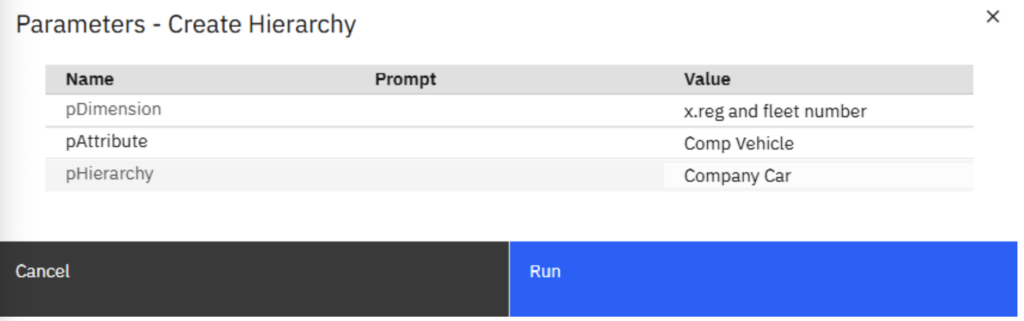
    When the process runs, you will be prompted to enter:

    • ·the dimension name
    • the attribute name
    • the new hierarchy name

    The following was entered as an example into the prompts:

    • Dimension: x.reg and fleet number
    • Attribute: Comp vehicle
    • Hierarchy: Company Car

    parameter - create hierarchy

    Click on ‘Run’ to Run the process, the process will complete when the ‘Process .. executed successfully’ message appears, as below:

    process 'create hierarchy' executed successfully

    Step 4 — Review the new hierarchy #

    Once the process has completed, the new hierarchy, ‘Company Car’, will appear within the dimension.
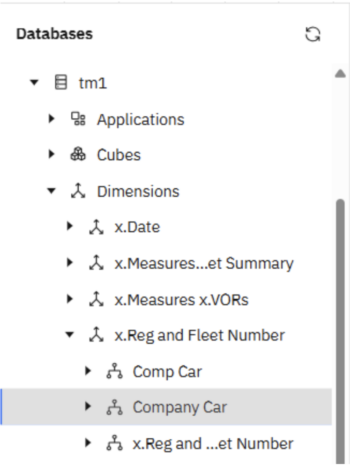
    hierachy company car successfully visibile in the databases

    The hierarchy structure will be built automatically from the attribute values.
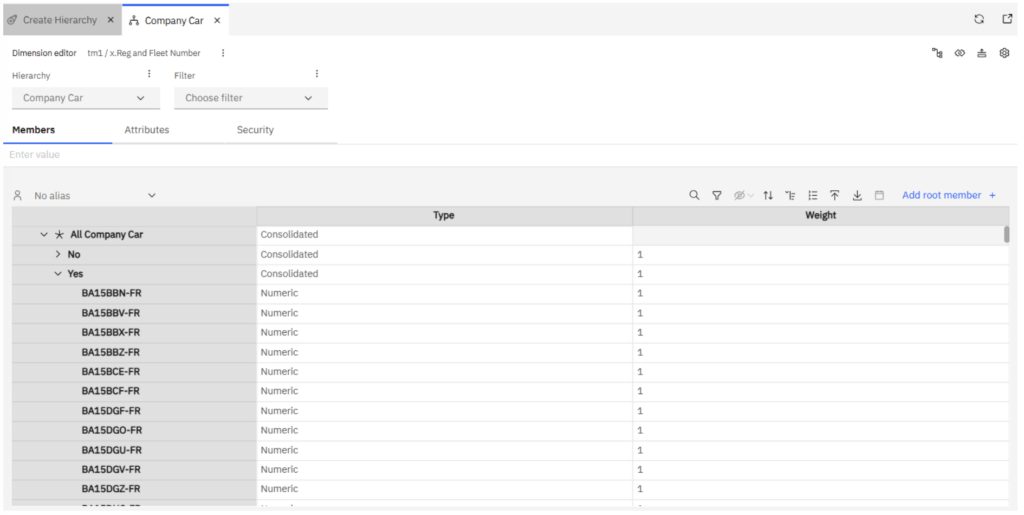
    hierarchy structure

    This allows users to analyse the same products in multiple ways without changing the cube structure.

    For example, users could now analyse:

    • products by product type
    • products by manufacturing country
    • products by supplier

    All using the same underlying Product dimension.

    Things to be aware of. #

    This process only includes leaf-level elements. Consolidated elements are ignored because Planning Analytics does not allow a consolidated element to become a child within another hierarchy structure.

    Elements with blank attributes are also ignored. In many models this is perfectly acceptable, but you could extend the process to place blank values into an “Other” or “Unassigned” consolidation if required.

    Because the hierarchy is generated automatically, it can easily be rebuilt whenever new products or attribute values are added from the source system.

    Final thought #

    Automatically generating hierarchies from attributes can save a significant amount of manual maintenance within IBM Planning Analytics, especially in models where dimensions are regularly updated from external systems.

    It also gives users much more flexibility when analysing data, without adding unnecessary complexity to cube design.

    If you would like help building automated hierarchies, improving metadata processes or reviewing your Planning Analytics model structure, feel free to talk to us. 

    Updated on June 22, 2026

    Was this helpful?

    • Happy
    • Normal
    • Sad

    Share This Article :

    • Facebook
    • X
    • LinkedIn
    Aramar Tips: Analysing Data in IBM Planning Analytics for ExcelFundamentals: Feeders in IBM Planning Analytics
    Sections
    • Creating Hierarchy’s using the “Create Hierarchy” shortcut .
    • What this process will do
      • Step 1 — Create a new TI process
      • Step 2 — Add the Prolog code
      • Step 3 — Run the process
      • Step 4 — Review the new hierarchy
    • Things to be aware of.
    • Final thought

    Our Accreditations and Partners

    Aramar works with customers of all sizes, from a range of industries helping them with Business Analytics, Business Process, Sustainability and AI solutions using IBMs leading software solutions.

    email contactus@aramar.co.uk

    • LinkedIn
    • YouTube

    Registered Address:
    124 City Road,
    London,
    EC1V 2NX

    © Aramar 2026. All Rights Reserved.

    Terms of use Privacy Policy

    Website and Marketing by Unity Online